
Cover vs Concealment Airsoft: The Woodland Golden Rule
Cover vs concealment in airsoft, explained: cover stops the BB, concealment only hides you. Learn the golden rule, the mental test, and which woodland ripari are real hard cover.
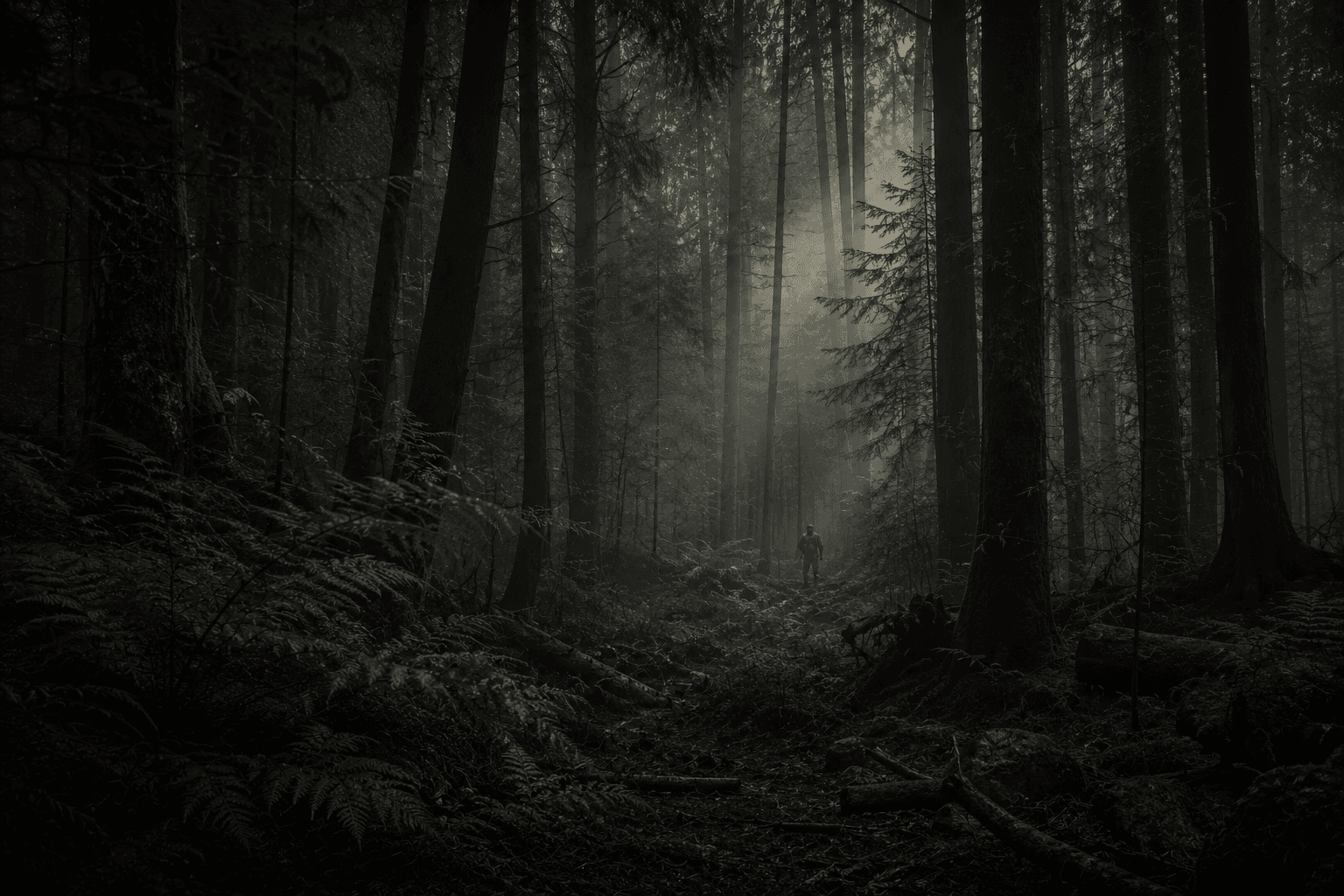
Two words decide more woodland airsoft games than camo, gun choice or fitness combined: cover and concealment. They sound like synonyms. They are not — and the player who treats a bush like a brick wall is the player who walks back to respawn wondering what went wrong.
What is cover vs concealment in airsoft?
Military doctrine separates two concepts that beginners merge into one. The distinction is the single most important idea in woodland fieldcraft, and it survives the jump from real combat manuals straight into airsoft.
- Cover is protection against fire. It physically stops the projectile. In military terms: thick trunks, rocks, ditches, folds in the ground. Field manuals note that even the smallest depression or fold in the terrain can give some cover.
- Concealment is protection against observation. It hides you from view but stops nothing. Bushes, tall grass, foliage, shadow. The doctrine is blunt: concealment does not protect you from enemy fire — do not think you’re protected just because you’re concealed.
Put it in one sentence: a bush hides you, but stops nothing. A thick trunk does both. Every other rule in this article is a footnote to that line.
The golden rule of cover in airsoft
Strip the doctrine down to something you can recall mid-game, under stress, with a BB cracking past your ear, and you get one line:
“If it doesn’t stop the BB, it’s only concealment.”
That is the golden rule. It is deliberately uncompromising. It does not care how leafy, how dark, or how comfortable a position feels. It asks one binary question and accepts one of two answers. If a position stops the BB, it is cover — you can stand your ground and trade fire from it. If it does not — foliage, a bush, netting, grass — it is only concealment, and its single legitimate job is to break the line of sight and buy you time until you reach genuine cover.
Concealment is not useless. Breaking line of sight is a powerful tool: a hidden player is a player the enemy cannot aim at, and an enemy who cannot aim at you cannot hit you either. The error is never using concealment. The error is mistaking it for cover and then fighting from it as if it would stop incoming fire.
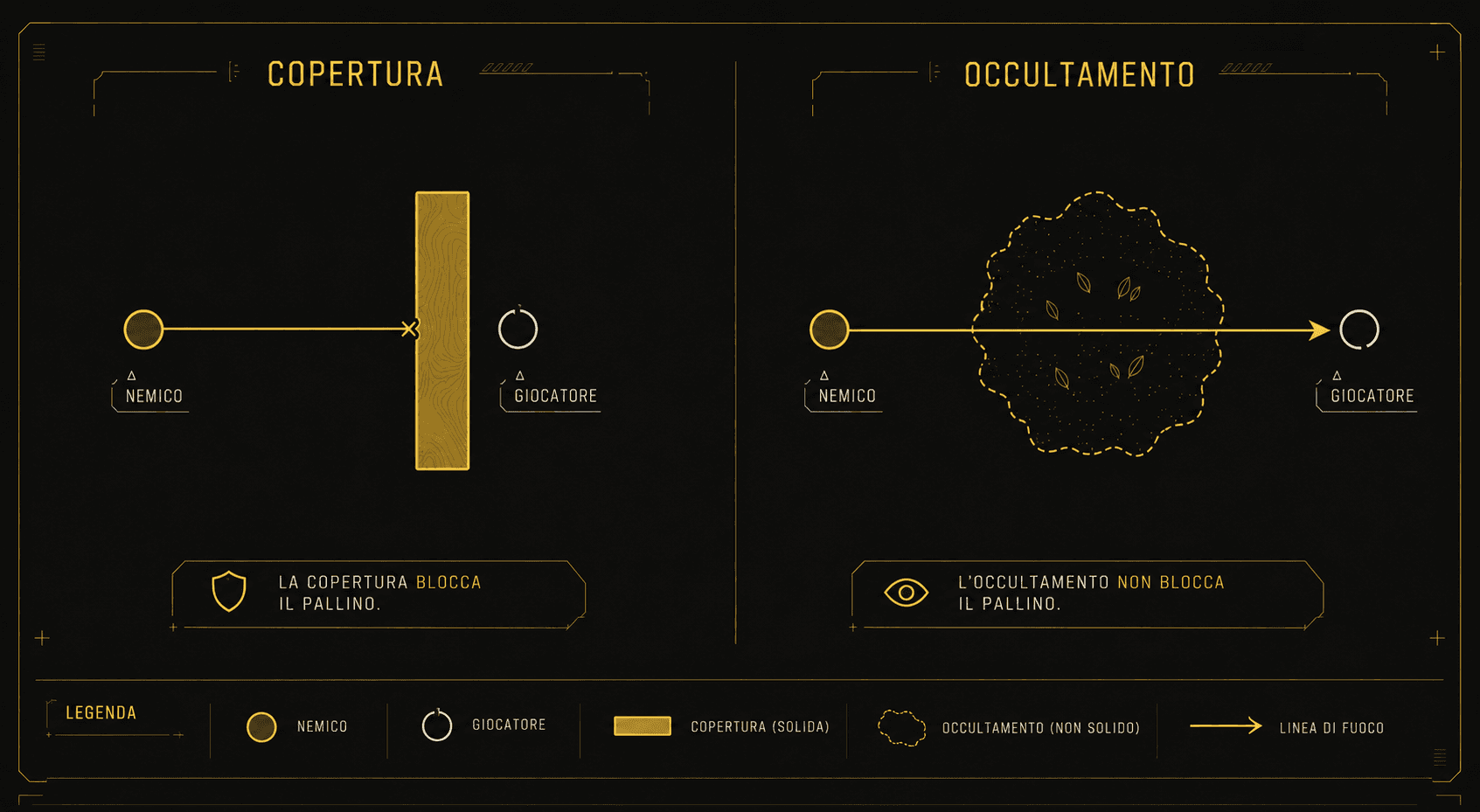
Concealment still earns its keep when you move. Slipping from one piece of hard cover to the next behind a screen of foliage is the heart of tactical movement between cover — the bush buys the seconds, the trunk wins the fight.
Does foliage stop airsoft BBs? The airsoft cover advantage
Here is the part the military manuals can’t tell you, because airsoft changes the physics in your favor. Adapting real-combat doctrine means knowing what does not transfer — and one of the biggest differences is a quiet gift.
An airsoft replica fires a 6 mm BB weighing roughly 0.20 to 0.30 g, normally capped near 1 Joule, with a short useful range. The projectile is slow and light, and critically, it does not penetrate. That single fact rewrites the cover map of the entire forest.
A rifle bullet punches straight through a thin trunk, a plank, a wooden fence. A BB does not. Things that would be useless cover in a real firefight — a thin trunk, a loose plank, a thick branch, a section of very dense vegetation — can actually stop a BB. Woodland fields are full of genuine hard cover that simply wouldn’t qualify in real combat.
| Object | Real combat | Airsoft (~1 J) |
|---|---|---|
| Thick tree trunk | Cover | Cover |
| Thin trunk / sapling | Concealment | Cover |
| Wooden plank or pallet | Concealment | Cover |
| Thick branch / log pile | Concealment | Cover |
| Very dense brush | Concealment | Often cover |
| Loose leaves, single twig | Concealment | Concealment |
| Tall grass, netting | Concealment | Concealment |
Two things follow. First, because the BB is low-energy and short-ranged, woodland airsoft is fought at even shorter distances than real combat — closing ground under concealment is half the game. Second, the trap is unchanged: relying on foliage that only hides you. But the good news outweighs the trap — the forest hands you a lot of real cover, if you train your eye to recognize it.
The mental test for real cover before you trust a position
The golden rule becomes useful only when it’s a reflex. Before you commit to any position — before you settle in to trade fire from it — run a one-question test, fast and honest:
“Would this stop a BB?”
- Answer yes — it’s cover. Stay. Fight from it. Get as much of your body behind it as the geometry allows: frontal, flank and overhead lines all matter, not just the one facing the enemy you currently see.
- Answer no — it’s concealment. Use it for exactly one thing: break line of sight, then keep moving toward real cover. Do not settle. Do not trade shots from it as a default. The moment you fire, you have given away the one advantage concealment offered.
- Not sure — treat it as concealment. When in doubt, assume the weaker case. Optimism about cover is how players get tagged.
The test takes a fraction of a second once it’s trained. The whole point is to make it automatic, so that under stress — when the comfortable, leafy, shaded spot is whispering “stay here, you’re fine” — the honest answer arrives before the comfortable one.
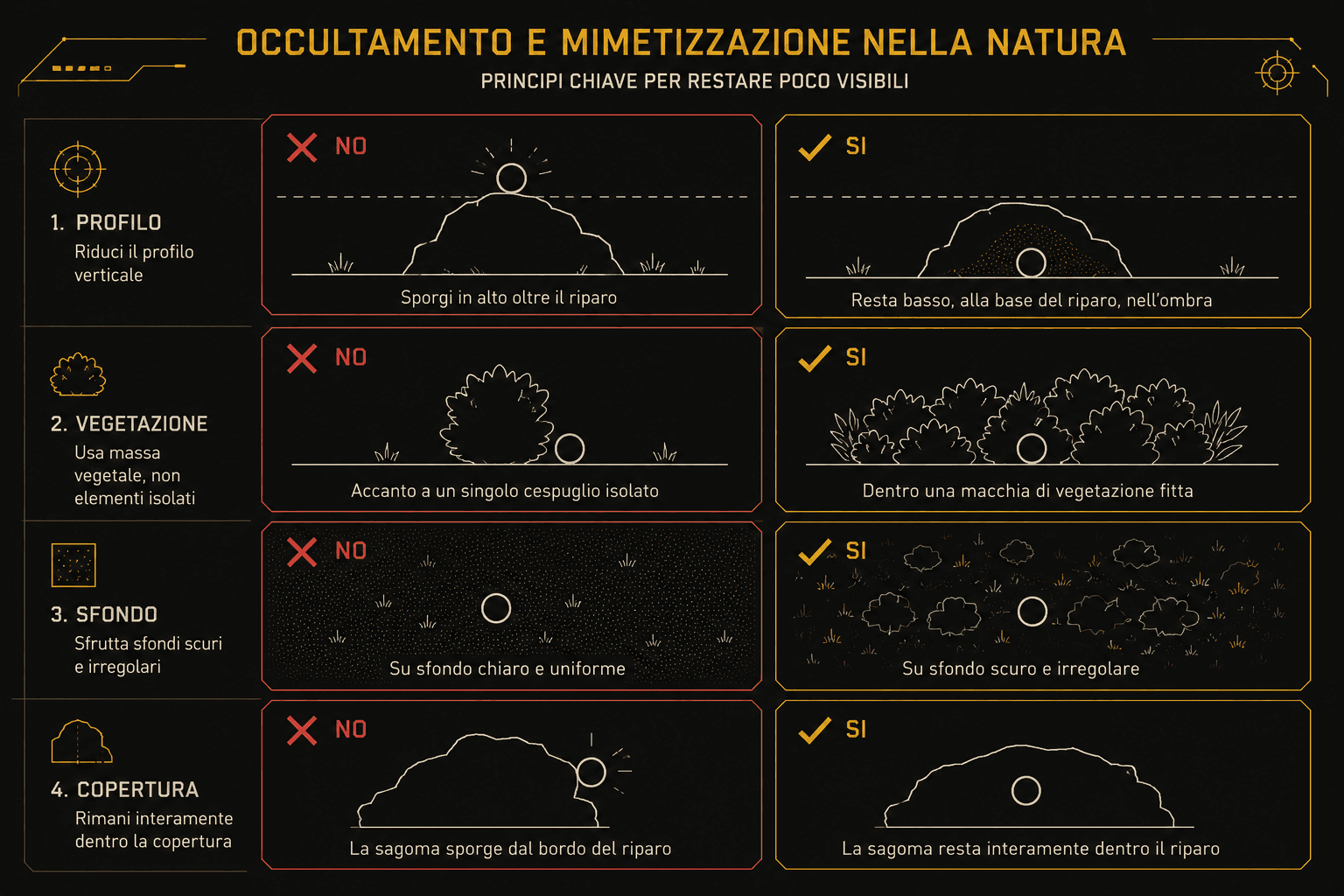
Cover only protects the lines it actually blocks. A flanker who works around your trunk turns your cover into nothing — which is why where the squad stands relative to its cover is a question of squad formations and sectors, not just individual fieldcraft.
Cover and concealment examples on a woodland airsoft field
Doctrine sticks when it’s attached to objects you’ll actually crouch behind. Here is the forest, sorted.
What is real cover
- Thick trees. The gold standard. A mature trunk wider than your torso stops everything and gives you a stable shooting brace.
- Earth and terrain. Ditches, banks, mounds, fallen logs, even a shallow fold in the ground. Earth stops BBs absolutely and is everywhere on a woodland field.
- Rocks and boulders. Obvious, permanent, reliable. Worth crossing open ground for.
- Built structures. Bunkers, plank walls, pallets, stacked logs — common on dedicated fields, and at airsoft energies they genuinely stop fire.
What is only concealment
- Bushes and shrubs. The single most over-trusted thing in the forest. They break sight, nothing more.
- Tall grass and ferns. Excellent for staying unseen while prone or low-crawling. Zero protection if you’re spotted.
- Loose foliage, leaves, a single thin branch. Visual clutter only.
- Shadow and shade. Powerful concealment, especially against players scanning from sunlight. Stops not one BB.
- Camo netting. A concealment tool by design. It hides shape and outline; it does not stop fire.
The classic mistake: hiding behind foliage
There is one error so common it has a signature, and it’s made by two very different players: the nervous beginner and the rushed veteran.
The beginner dives behind the nearest bush because it feels safe — they can’t see the enemy, so surely the enemy can’t hurt them. The veteran does the same thing for the opposite reason: moving fast, low on time, they grab the first thing-shaped object without running the test. Both end up crouched behind leaves, convinced they’re protected.
They are invisible — for exactly one second. The moment they lean out to shoot, the muzzle, the movement and the BBs going downrange announce their position precisely. And now the foliage that hid them does nothing against the return fire. They have traded a real advantage (being unseen) for an imaginary one (being “behind cover”), and the enemy collects.
The fix is not “never use bushes.” Bushes are great — for closing distance, for breaking contact, for repositioning unseen. The fix is to know which thing you’re standing behind and behave accordingly: fight from cover, transit through concealment. When fire snaps in unexpectedly, the trained reaction is to get to real cover first and orient second — the exact sequence drilled in react-to-contact battle drills. And while concealment moves you, good airsoft camouflage keeps you unseen long enough to reach the next trunk.
How to use and mark cover as a squad
Recognizing cover is an individual skill. Sharing that recognition across a squad is a force multiplier — and it’s where most teams quietly lose ground. One player knows the big oak at the treeline is solid; the other five are guessing as they advance.
This is where Tattica Six turns one player’s fieldcraft into the whole squad’s. During the pre-game walk or on the move, anyone can drop a marker on the live GPS map at their exact position: hard cover here, open danger area — cross fast, only concealment, do not hold. Every teammate sees those markers on their own device and on their Apple Watch, so the squad advances along a known chain of real cover instead of improvising bush to bush. The shared mission briefing lets the squad leader pre-plot bounding routes from one hard point to the next before anyone steps off — and when push-to-talk voice calls “moving,” everyone already knows which marker is the next genuine piece of cover.
FAQ
What is the difference between cover and concealment in airsoft?
Cover protects you from fire — it physically stops the BB. Concealment protects you from observation — it hides you from view but stops nothing. A thick trunk is cover. A bush is concealment. The mistake is treating the second as if it were the first: you’re invisible for a second, but the moment you shoot, foliage will not protect you from the answer.
Does foliage stop airsoft BBs?
Loose leaves, grass and a single thin branch generally do not stop a BB — they only break the line of sight. But because airsoft replicas are low-energy (around 1 J), very dense vegetation, a stack of branches or thick brush can actually stop a BB where it would never stop a bullet. Treat ordinary foliage as concealment until it is dense enough to genuinely stop fire.
What counts as hard cover in airsoft?
Because the projectile is slow and light — a 6 mm BB of roughly 0.20 to 0.30 g, normally capped near 1 J. It does not penetrate. A thin trunk, a plank, a thick branch or very dense vegetation that a real bullet would punch straight through can stop a BB completely. Woodland fields give you far more genuine hard cover than a real engagement would — if you can recognize it.
How do I tell if a position is real cover before I use it?
Run the mental test the instant you reach it: would this stop a BB? If yes, it is cover — stay and fight from it. If no — foliage, a bush, netting, tall grass — it is only concealment, useful purely to break line of sight and buy time while you move to genuine cover. Never let the comfort of being hidden talk you into believing you’re protected.
Coordinate your next game with Tattica Six
Live GPS map, push-to-talk and shared briefing — for the squad that takes airsoft seriously.
Explore Tattica Six